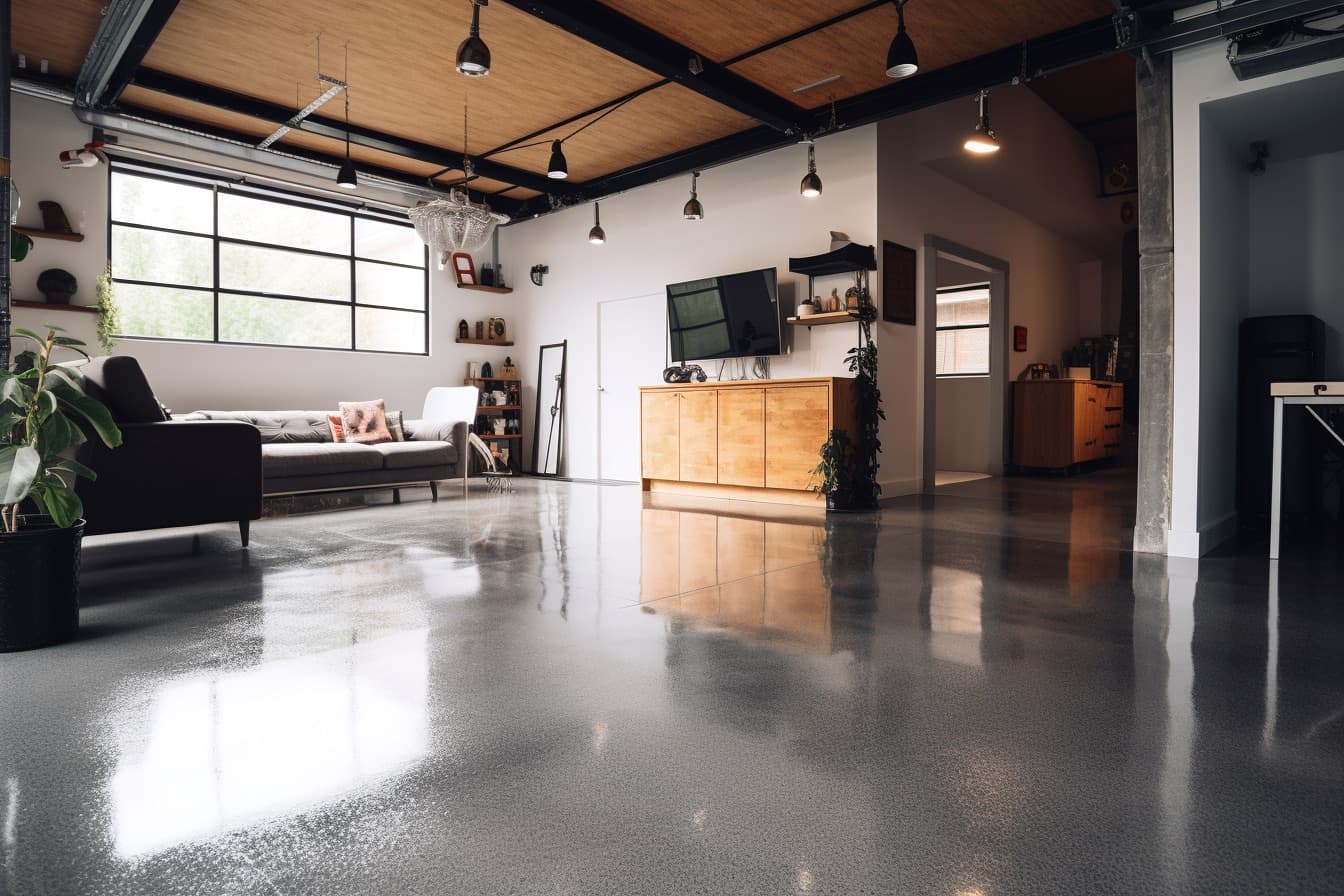
Garage Floor Epoxy: A Complete Guide
[tts voice=”en-AU-NatashaNeural”]Garage floor epoxy is an excellent way to enhance the look and functionality of your garage.[/tts]
Epoxy is a type of coating that you apply to your garage floor to give it a sleek, durable, and long-lasting finish.
In this article, we’ll take an in-depth look at the advantages, application process, and cost considerations of garage floor epoxy and compare it to other flooring options.
Table of Contents
Understanding Garage Floor Epoxy
What is Garage Floor Epoxy?
Garage floor epoxy is a thermosetting resin that you combine with a hardening agent to create a hard, durable finish. Once the two components are mixed, the epoxy chemically reacts to form a rigid plastic material that adheres strongly to concrete floors.
Garage floor epoxy is a popular choice for homeowners who want to protect their garage floors from oil spills, tire marks, and other forms of damage. It not only enhances the appearance of the garage but also makes it easier to clean and maintain.
Types of Garage Floor Epoxy
There are three main types of garage floor epoxy: water-based, solvent-based, and 100% solids.
Water-Based Epoxy
Water-based epoxy is the most affordable and easy to find, but it is the weakest of the three. It is an excellent option for homeowners who want to apply the epoxy themselves, as it is easy to work with and has a low odor. However, it is not as durable as the other types and may require more frequent reapplication.
Solvent-Based Epoxy
Solvent-based epoxy is stronger and more durable than water-based epoxy, but it can be difficult to work with due to its potent fumes. It is an excellent option for homeowners who want a long-lasting and durable finish. However, it is not recommended for DIY projects, as it requires special equipment and proper ventilation.
100% Solids Epoxy
100% solids epoxy is the most potent, longest-lasting, and most expensive of the three, but it takes the longest to cure. It is an excellent option for homeowners who want the highest level of protection for their garage floors. It is also commonly used in commercial and industrial settings where durability is a top priority. However, it is not recommended for DIY projects, as it requires special equipment and expertise.
When choosing the type of garage floor epoxy, it is essential to consider factors such as durability, cost, ease of application, and curing time.
The Advantages of Garage Floor Epoxy
Durability and Longevity
Garage floor epoxy is a popular choice for homeowners and automotive enthusiasts because of its durability and longevity. Epoxy is made from a combination of resins and hardeners that create a strong, durable surface that can withstand heavy foot traffic, hot tires, chemicals, and spills without chipping, cracking, or peeling. This means that your garage floor will look new for years to come, even with regular use.
In addition to its durability, epoxy also seals the garage floor, preventing moisture and salt damage, which can lead to cracks and stains. This is especially important for those who live in areas with harsh winters, where salt is often used to melt ice and snow on the roads.
Resistance to Stains and Chemicals
Garage floors are often exposed to oil, gas, antifreeze, and other automotive chemicals that can cause stains and damage to the concrete. However, epoxy is resistant to these substances, making it easier to clean up spills and stains and preventing them from soaking into the concrete and causing damage.
Not only does this make your garage floor look better, but it also helps to maintain the structural integrity of the concrete underneath. This can save you money in the long run by preventing the need for costly repairs or replacements.
Enhanced Safety Features
Another advantage of garage floor epoxy is its enhanced safety features. Epoxy provides a slip-resistant surface that reduces the risk of falls and injuries in your garage. This is especially important if you have children or elderly family members who may be more prone to falls.
In addition to its slip-resistant properties, epoxy also reflects light and brightens up the space, making it easier to see what you’re working on. This is especially beneficial for those who use their garage as a workshop or for DIY projects.
Easy Maintenance and Cleaning
One of the biggest advantages of garage floor epoxy is its easy maintenance and cleaning. Unlike other flooring options, such as carpet or tile, epoxy does not require any special cleaning solutions or equipment. You only need a broom or a mop to keep the floor looking clean and new.
In addition, epoxy is resistant to mold and mildew, which can be a problem in garages that are not well-ventilated. This means that you can enjoy a clean, healthy garage without having to spend a lot of time or money on maintenance.
Aesthetic Appeal
Finally, garage floor epoxy is available in a wide variety of colors, finishes, and textures, giving you unlimited design options for your garage. You can choose from solid colors, metallic finishes, flakes, and chips to create a customized look that complements the style of your home.
Whether you want a sleek, modern look or a more traditional style, garage floor epoxy can help you achieve the look you want. And because epoxy is so durable and long-lasting, you can enjoy your new garage floor for years to come.
Garage Floor Epoxy Application Process
Preparing the Garage Floor
The first step in applying garage floor epoxy is to prepare the garage floor. This involves cleaning and repairing any cracks, chips, or blemishes to ensure that the surface is smooth and level. You can use a pressure washer or floor grinder to clean the floor thoroughly, then allow it to dry completely.
It is important to note that the garage floor must be completely clean and free of any debris before applying the epoxy. Any dirt, dust, or debris left on the garage floor can cause the epoxy to not adhere properly, resulting in an uneven and unattractive finish.
If there are any cracks or chips in the garage floor, it is important to repair them before applying the epoxy. This can be done using a concrete patching compound. Allow the compound to dry completely before proceeding with the epoxy application.
Choosing the Right Epoxy Product
The next step is to choose the right epoxy product for your garage floor. Consider the type of epoxy, the color, and the pattern you want to achieve. It is best to consult with a professional to ensure that you get the right product.
There are many different types of epoxy products available, each with their own unique features and benefits. Some are designed for high traffic areas, while others are better suited for decorative purposes. It is important to choose the right product for your specific needs to ensure the best possible results.
When choosing a color and pattern for your garage floor, consider the overall aesthetic of your home and garage. You want to choose a color and pattern that will complement your existing decor and add value to your home.
Application Techniques and Tips
Once you have your materials, you can begin applying the epoxy. Follow the instructions carefully, and use proper safety equipment, such as gloves and goggles. Apply the epoxy in thin coats, and allow each layer to dry before applying the next one.
It is important to note that the temperature and humidity can affect the application and drying process of the epoxy. Be sure to check the manufacturer’s instructions for the recommended temperature and humidity range for application.
When applying the epoxy, it is important to work in small sections to ensure that the epoxy is applied evenly and smoothly. Use a roller or brush to apply the epoxy, and be sure to spread it evenly over the entire surface of the garage floor.
After applying the epoxy, allow it to dry completely before walking or driving on it. This can take anywhere from 24 to 72 hours, depending on the temperature and humidity.
Once the epoxy is dry, you can add a topcoat for added durability and shine. This will help protect the epoxy from scratches, stains, and other damage.
Maintenance and Care
To keep your garage floor looking its best, it is important to properly maintain and care for it. This includes regular cleaning and sweeping to remove dirt and debris, as well as avoiding harsh chemicals and abrasive cleaners that can damage the epoxy.
If you notice any damage or wear and tear on the epoxy, it is important to repair it as soon as possible to prevent further damage. This can be done using a concrete patching compound or by applying a new coat of epoxy.
By following these tips and techniques, you can achieve a beautiful and durable garage floor that will enhance the overall value and appearance of your home.
Cost and Time Considerations
Estimating the Cost of Garage Floor Epoxy
The cost of garage floor epoxy ranges from $3 to $12 per square foot, depending on the type of epoxy, the size of the floor, and the complexity of the project. It is best to get a quote from a professional contractor to get an accurate estimate.
Time Required for Application and Curing
The application process takes about two to three days, depending on the size of your garage, the type of epoxy and the weather conditions. It takes about a week for the epoxy to cure fully, so you will need to avoid parking cars or heavy equipment on the floor until it is fully cured.
Comparing Garage Floor Epoxy to Other Flooring Options
When it comes to choosing the right flooring option for your garage, there are several factors to consider. You want a surface that is durable, easy to maintain, and can withstand the wear and tear of daily use. In this article, we will compare garage floor epoxy to other popular flooring options and explore the advantages of each.
Epoxy vs. Concrete Sealers
While both epoxy and concrete sealers are used to protect and enhance the appearance of concrete floors, there are some key differences between the two. Epoxy is a more durable and long-lasting option than concrete sealers. It also offers more design options, such as metallic and color flakes, and is resistant to stains and chemical spills. In contrast, concrete sealers are a more budget-friendly option but do not offer the same level of protection and design options as epoxy.
Epoxy vs. Garage Floor Paint
Many homeowners opt for garage floor paint as a quick and easy solution for improving the appearance of their garage floor. However, epoxy is a better choice for those who want a more durable and long-lasting solution. Compared to paint, epoxy offers a slip-resistant surface that is more resistant to chemicals and stains. It also provides a high-gloss finish that can enhance the overall appearance of your garage.
Epoxy vs. Interlocking Tiles
Interlocking tiles are a popular option for those who want a garage floor that is easy to install and can be customized to fit their specific needs. However, epoxy is a more cost-effective solution that provides a smooth, seamless surface that is easy to clean and maintain. Unlike interlocking tiles, epoxy does not require any grout lines that can trap dirt and debris. It also offers a wider range of design options, such as metallic and color flakes, that can enhance the overall appearance of your garage.
Overall, garage floor epoxy is a versatile and durable option that offers many advantages over other flooring options. Whether you want a high-gloss finish or a slip-resistant surface, epoxy can be customized to fit your specific needs and provide long-lasting protection for your garage floor.
Frequently Asked Questions about Garage Floor Epoxy
If you’re considering garage floor epoxy, you probably have a lot of questions. Here are some of the most frequently asked questions and their answers:
How Long Does Garage Floor Epoxy Last?
Garage floor epoxy is known for its durability and longevity. When properly installed and maintained, epoxy can last up to 20 years. However, the lifespan of your epoxy floor will depend on several factors, including the quality of the materials used, the amount of traffic your garage sees, and how well you take care of the floor.
Regular cleaning and maintenance will help extend the life of your garage floor epoxy. Sweep or vacuum the floor regularly to remove dirt and debris, and clean up spills promptly to prevent staining or damage to the coating. Avoid using harsh chemicals or abrasive cleaners on the floor, as these can scratch or dull the surface.
Can I Apply Epoxy Over an Existing Coating?
It is not recommended to apply epoxy over an existing coating. While it may seem like a quick and easy solution, it can lead to problems down the road. The old coating may not adhere properly to the new epoxy, causing it to peel or flake off. Additionally, any imperfections or damage to the old coating will be visible through the new epoxy.
If you have an existing coating on your garage floor, you will need to remove it completely before applying the new epoxy. This can be a time-consuming and labor-intensive process, but it is necessary to ensure a smooth and long-lasting finish.
Is Garage Floor Epoxy Slippery When Wet?
Epoxy is a popular choice for garage floors because it is durable, easy to clean, and resistant to stains and chemicals. However, one concern that many people have is whether epoxy is slippery when wet.
While epoxy is slip-resistant when dry, it can become slippery when wet. This is especially true if the surface is smooth or glossy. To avoid slips and falls, it’s important to take steps to make your epoxy floor safer.
One option is to use a non-slip additive in the epoxy mixture. This will create a textured surface that provides better traction, even when the floor is wet. Another option is to choose a textured finish for your epoxy floor, such as a flake or quartz finish. These finishes not only add visual interest to the floor, but also provide a non-slip surface.
Regardless of the finish you choose, it’s important to take care when walking on your epoxy floor, especially when it’s wet. Wear slip-resistant shoes or boots, and avoid running or jumping on the surface.
Conclusion: Is Garage Floor Epoxy Right for You?
Garage floor epoxy is an excellent choice if you want a durable, long-lasting, and easy-to-maintain garage floor. It offers numerous advantages over other flooring options and can be customized to fit your design preferences. If you are interested in applying garage floor epoxy, consult with a professional contractor to get started.